Crafting a Winning CRM Strategy: A Comprehensive Guide
Implementing a Customer Relationship Management (CRM) system is no longer a luxury; it's a business imperative for sustainable growth in today's competitive landscape. However, the mere purchase of a CRM system is insufficient. True success hinges on a robust CRM strategy—a meticulously crafted plan encompassing clearly defined goals, streamlined processes, and quantifiable metrics for measuring success. This comprehensive guide provides the knowledge and insights necessary to develop and execute a winning CRM strategy, transforming your customer interactions and driving significant business growth.
The potential benefits of a properly implemented CRM are substantial and multifaceted. Improved customer relationships naturally lead to increased loyalty, resulting in higher customer lifetime value and reduced customer churn. Simultaneously, streamlined operational efficiency allows for optimized resource allocation and improved productivity across various departments. Enhanced sales conversion rates, stemming from targeted marketing and improved lead management, contribute directly to increased revenue. However, without careful planning, diligent execution, and ongoing optimization, a CRM system can easily become a costly, underutilized asset, failing to deliver on its promised potential. This guide will equip you with the tools and knowledge to avoid this common pitfall and maximize your return on investment.
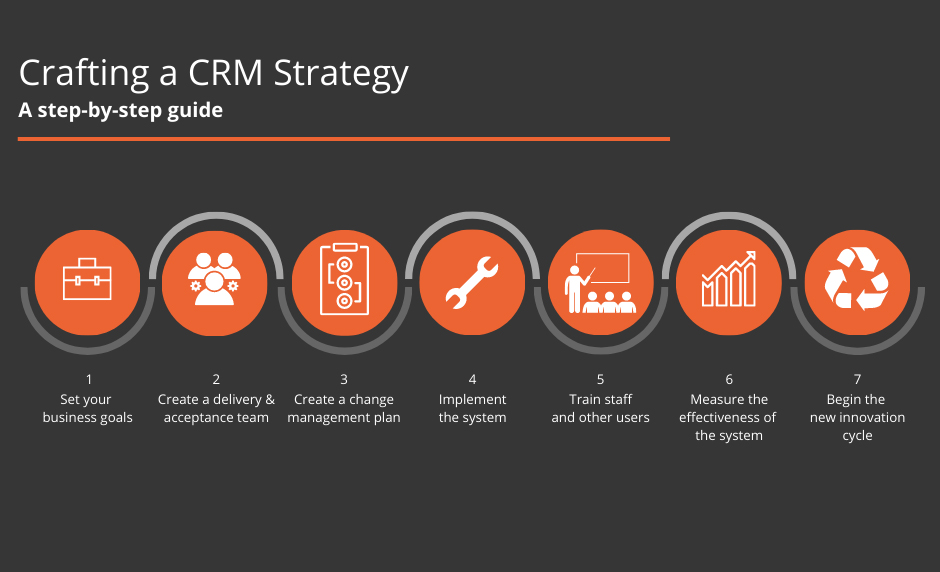
Key Takeaways
- A thriving CRM strategy necessitates clearly defined goals, meticulous planning encompassing all stages of implementation, and a commitment to ongoing optimization and adaptation. Regular review and adjustment are key to maintaining relevance and effectiveness.
- Choosing the right CRM system is a critical decision, requiring a thorough evaluation of your business size, industry specifics, current technological infrastructure, and future scalability needs. The selected system should seamlessly integrate with existing platforms to avoid data silos and ensure efficient workflow.
- Consistent data entry, maintained through robust training programs and clear protocols, is paramount to maximizing CRM effectiveness. Data quality directly impacts the accuracy of reporting and the ability to make data-driven decisions. Inconsistent or inaccurate data renders even the most sophisticated CRM system ineffective.
Table of Contents
- Defining Your CRM Goals: A Foundation for Success
- Choosing and Implementing Your CRM Strategy: A Phased Approach
- Frequently Asked Questions (FAQ)
- Conclusion: Embracing the Journey to CRM Success
Defining Your CRM Goals: A Foundation for Success
Before even considering specific CRM software options, the foundational step is defining your overarching objectives. What tangible improvements do you hope to achieve with a CRM? Are your primary goals enhanced customer service, leading to increased customer satisfaction scores (CSAT) and Net Promoter Scores (NPS)? Do you aim for significant sales growth, achieved through improved lead qualification and sales pipeline management? Or are you focused on streamlining marketing efforts, improving campaign performance metrics such as click-through rates (CTR) and conversion rates? Often, a successful CRM strategy addresses a combination of these objectives.
Clearly articulated, measurable goals serve as your compass, guiding every subsequent decision. Employing the SMART goal framework—Specific, Measurable, Achievable, Relevant, and Time-bound—is crucial. Instead of a vague goal like "improve customer service," aim for a specific and measurable target such as "reduce customer service resolution time by 25% within the next six months, as measured by average ticket resolution time." This quantifiable goal allows for precise tracking of progress and demonstrable ROI.
"A clear understanding of how the CRM system will directly contribute to achieving overarching business objectives is the cornerstone of a successful implementation. Without this connection, the system risks becoming a standalone tool, rather than an integrated part of the overall business strategy."
Choosing and Implementing Your CRM Strategy: A Phased Approach
Selecting the appropriate CRM system is a pivotal decision demanding careful consideration. The market is replete with diverse options, each possessing its own unique strengths, weaknesses, and pricing structures. Factors to evaluate include your budget constraints, the size and technical expertise of your team, the complexity of your existing business processes, and the necessary level of integration with other crucial systems (e.g., ERP, marketing automation).
Consider the analogy of selecting a vehicle: a compact car suffices for city driving, while a heavy-duty truck is essential for hauling substantial loads. Similarly, a small business might find a simple, user-friendly CRM adequate, while a large enterprise necessitates a robust, scalable solution capable of handling vast amounts of data and supporting complex workflows. The choice should align precisely with your current and projected needs.

Actionable Steps:
- Comprehensive Needs Assessment: Thoroughly analyze your existing processes, pinpoint pain points hindering efficiency, and identify areas where a CRM can provide significant improvements. This assessment should involve input from various departments to gain a holistic understanding of requirements.
- Rigorous CRM Solution Research: Explore multiple CRM vendors, comparing their features, functionalities, pricing models, and customer support offerings. Consider both cloud-based and on-premise solutions, weighing the benefits and drawbacks of each.
- In-Depth Product Demonstrations: Request demos from shortlisted vendors to gain hands-on experience with their platforms. Evaluate user-friendliness, customization options, and the overall intuitiveness of the interface.
- Pilot Program Implementation: Before full-scale deployment, conduct a pilot test with a small, representative group of users. This allows for identifying and addressing potential issues early on, minimizing disruption during the full rollout.
- Comprehensive User Training: Invest in thorough training programs for all users, ensuring they understand the system's functionalities and best practices for data entry. Ongoing support and refresher training are crucial for maintaining user proficiency and data quality.
- Data Migration and Integration: Plan for the seamless migration of existing customer data into the new CRM system. Address any necessary data cleansing and ensure proper integration with other critical business systems to avoid data silos.
💡 Pro Tip: Adopt a phased approach, starting with the core functionalities and gradually expanding CRM usage. Avoid trying to implement every feature simultaneously, focusing instead on building a solid foundation before adding more complex features. This iterative approach allows for continuous feedback and optimization.
Frequently Asked Questions (FAQ)
What are the common pitfalls to avoid when implementing a CRM strategy?
Several common pitfalls can derail even the most well-intentioned CRM implementations. Inadequate planning, often stemming from a lack of clear objectives or insufficient needs assessment, is a significant factor. Insufficient training, leading to low user adoption rates and poor data quality, is another frequent issue. Neglecting data integrity, failing to establish clear data entry protocols, and neglecting data cleansing can render the entire system ineffective. Finally, a lack of ongoing monitoring and optimization, neglecting to adapt to evolving business needs and technological advancements, can lead to a decline in CRM effectiveness over time.
A comprehensive CRM strategy proactively mitigates these risks through meticulous planning, robust training programs, and a commitment to ongoing monitoring and optimization. Remember, a CRM system is only as effective as the data it contains and the people who use it. Poor data quality, stemming from inconsistent data entry or a lack of data validation, negates the benefits of even the most sophisticated CRM software. Consistent training, reinforced by ongoing support and readily available documentation, is crucial for maximizing the system's value and ensuring its continued effectiveness. Regular data audits and cleansing processes help maintain data accuracy and integrity, crucial for deriving meaningful insights from the data.
Conclusion: Embracing the Journey to CRM Success
Developing a successful CRM strategy is an ongoing journey, demanding continuous adaptation and refinement. It's not a one-time project but a dynamic process that requires careful planning, strategic execution, and a commitment to continuous improvement. By clearly defining objectives, meticulously selecting the right system, implementing it effectively, and consistently monitoring its performance, you unlock the CRM's full potential, leading to significant improvements in customer relationships, operational efficiency, and ultimately, your bottom line. A well-defined CRM strategy is a strategic investment in the long-term success and sustainable growth of your business, facilitating informed decision-making, enhanced customer engagement, and increased profitability. Embrace the process, learn from successes and setbacks, and your CRM system will become an invaluable asset in achieving your business goals.
0 Response to "Crafting a Winning CRM Strategy: A Comprehensive Guide"
Post a Comment